
We passed a solemn and terrible benchmark this past week: more than 200,000 fellow Americans have died from COVID-19. The number probably is closer to a quarter million, given that many who died in their homes were never tested, and therefore never received a confirmed diagnosis of COVID.
I have not wanted to inject politics into this blog. But when I see people red-faced and screaming that wearing a mask is a violation of their civil liberties, people comparing public health measures to slavery, people suggesting that the mild inconvenience of wearing a mask—which doctors, nurses, dentists, painters, construction workers, and scientists do every day—is somehow similar to the death sentence imposed on George Floyd, I wonder, When did we stop caring for each other?
On one of our trips to Africa, my wife and I were mesmerized watching an elephant calf, less than a week old, struggling for life. It clearly was in distress. Its eyes were red, the skin of its face wrinkled, its head held low. It tried feebly to suckle, but either could not grasp the nipple or could not obtain milk.
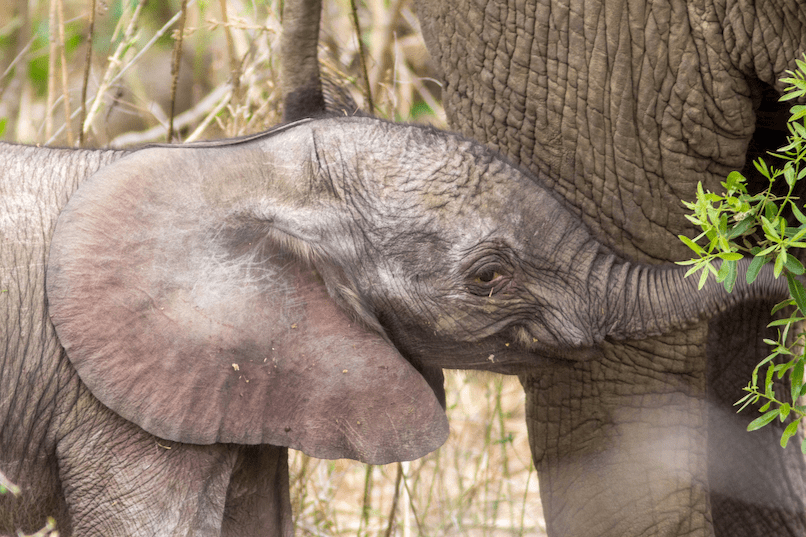
Her mother and another female, likely an aunt or older sister, stood by as the hapless infant finally lay down in the dust. They tried to coax the infant back to its feet. They nudged it with a foot and stroked it gently with a trunk. They tried for an hour as we watched the baby elephant die.
I’ve witnessed countless interactions with elephants. Elephants are so common in Kruger National Park that we adopted the safari slang of calling them “Ellies”. Many encounters were amazing. A few were mystifying. Some, as I related in the last blog, were terrifying. But I’ve never observed any elephant behavior so heart-wrenching as the hour we spent watching that baby die.
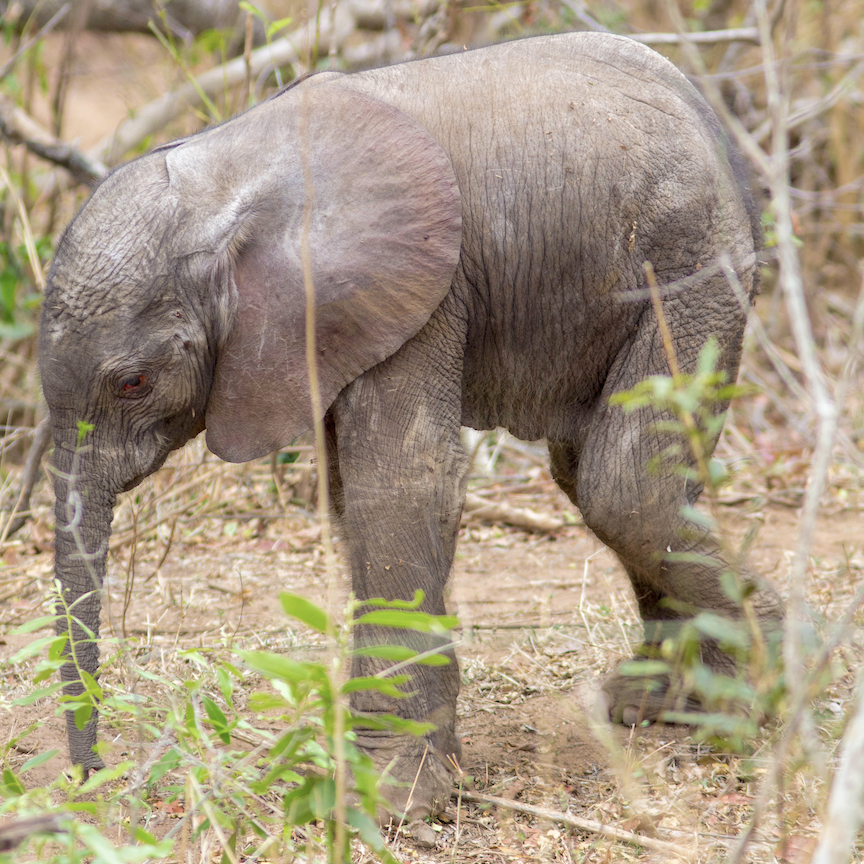
It was evident from the beginning that the infant was very sick, probably malnourished, and possibly suffering from a defect of birth. It was evident to the mother and aunt as well. I’ve witnessed other animals clutching their infants for days after their death, failing to recognize or understand the reality of death. One harbor seal I watched on the Pacific coast hauled her dead infant for three days until it was shapeless. She held it until a wave took it.
But the elephants were different.
Many wildlife researchers have commented on the strange behavior of elephants around the remains of their kin. Elephants are known to cover a dead elephant with leaves and branches, although no one knows why. Elephants also linger around the sun-bleached bones of an elephant carcass. We watched a very large bull elephant carrying the upper leg bone of a dead elephant in his mouth as he approached a herd. The matriarch turned and hurried away from the bull, a hundred others racing to keep up. What was the bull doing with the bone? Was this the bone from an elephant they knew, an elephant they recognized? Or was it a random act? And why did the others react the way they did? Was the act of carrying a bone viewed as a threat? Elephants are such a mystery.
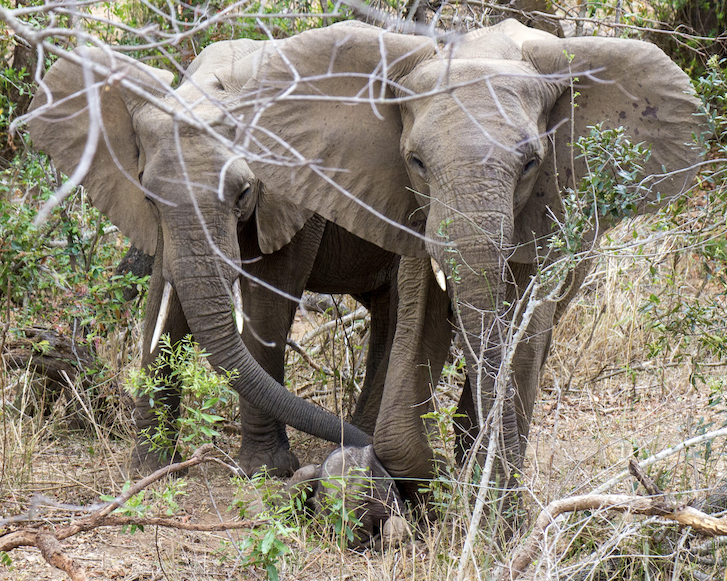
One thing, however, is certain about elephant behavior. The mother and aunt did not give up. They did not wander away when the infant lay down. They tried repeatedly to encourage it to rise again to its feet. They stood by its side until it stopped breathing. Only then did they slowly walk away.
I know this sounds anthropomorphic, like I am ascribing human emotions to animals in exactly the same way that I cautioned my students against. But the elephants knew suffering, and the elephants knew death. And they did not give up on each other while there was a chance for life. That’s what ellies know.
Why should we ask less of ourselves?
 Scott R. Robinson